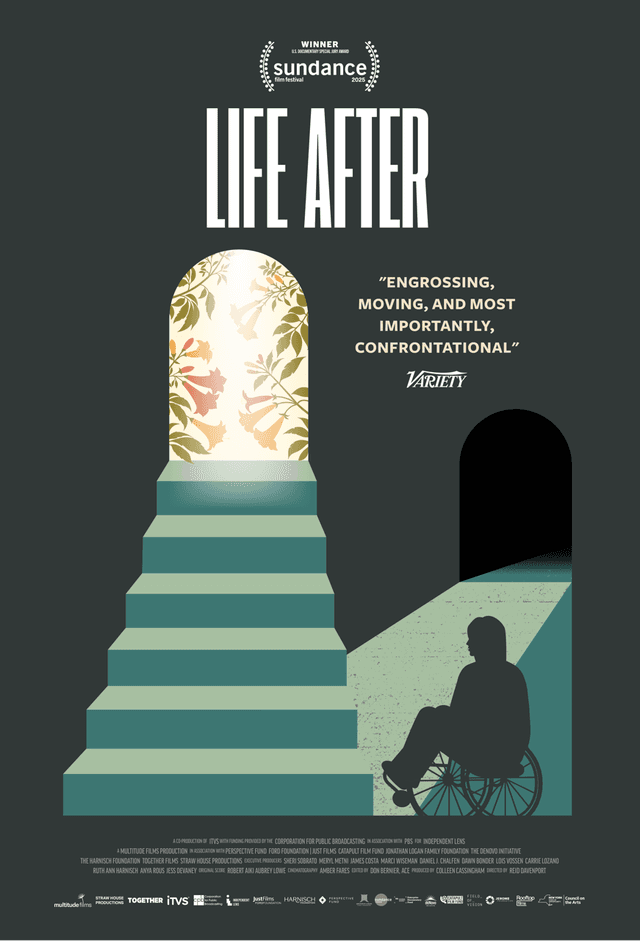
Disabled filmmaker Reid Davenport uncovers shocking abuses of power while amplifying the voices of the disability community fighting for justice and dignity in an unfolding matter of life and death.

Loading BTS videos...
Loading BTS photos...
Disabled filmmaker Reid Davenport (I DIDN’T SEE YOU THERE) trenchantly probes the legacy of Elizabeth Bouvia — a disabled California woman who, at the age of 26, sought “the right to die.” Her 1983 case provoked a national debate about the value of disabled lives, and Davenport sees echoes in chilling contemporary cases of disabled people dying prematurely — at their own hands and from a broken health care system. Through moving interviews and rich archival material, LIFE AFTER looks critically at where progressive values of bodily autonomy collide with the devaluing and fear of disabled lives.
I'm a filmmaker in New York City, living in a progressive milieu where conversations about the "right to die" hinge on treasured values of choice and bodily autonomy. But as a disabled person, I can sense people's undisguised fear of disability just below the surface. What's a hot button dinner party topic for some is utterly sinister for me, as I see people in my life exhibit a higher tolerance for the deaths of disabled people than for non-disabled people. The decision to make LIFE AFTER was a deliberate one, precisely because of the number of issues it raises, which transcend the issue of assisted suicide. After I discovered the case of Elizabeth Bouvia almost a decade ago, she became one of my reference points for the contemporary debate around assisted dying. I thought about her when I came across stories in the US about disabled people being either allowed to die or murdered without consequence. I thought about her as I watched in horror in 2020, as Canada began to allow disabled people—many impoverished, out of options—to take their own lives. As Elizabeth continued to cross my mind, I wondered if there was more to her story. LIFE AFTER is an attempt to recontextualize a national news story that was forgotten just as quickly as it broke. Bouvia's life, as I suspected, has much more resonance today than her public saga initially revealed. Her life needs to be remembered in its entirety, with the recovered pieces excavated in this film. Her story offers a provocation: why is it acceptable to give disabled people the means to die, before supporting them in the chance to live? -- Director Reid Davenport